Blog
Stay Safe in Bad Weather Tips for Riding in Rain and Wind

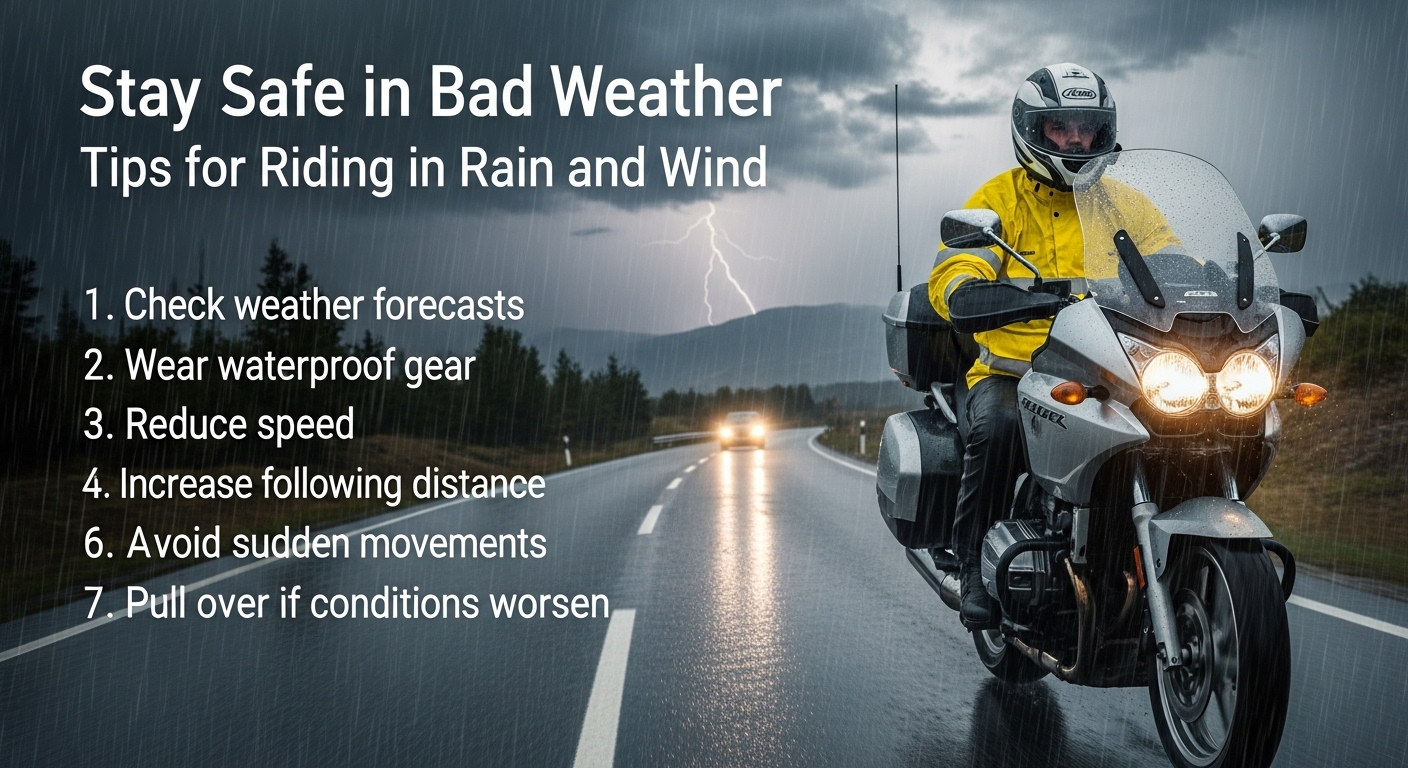
Riding a motorcycle is about freedom, control, and connection with the road. But when the weather turns hostile, that freedom comes with real risk. Motorcycle riding in bad weather demands heightened awareness, refined technique, and the right protective gear. Rain reduces traction, wind disrupts balance, and poor visibility challenges even experienced riders. Still, with preparation and smart riding strategies, it is absolutely possible to stay safe and confident when conditions deteriorate.
This comprehensive guide explores everything you need to know about motorcycle safety in bad weather, focusing on rain and wind. From riding techniques and road awareness to gear selection and mental preparedness, you’ll learn how to adapt without compromising control or confidence.
Understanding the Risks of Bad Weather Riding
Bad weather magnifies every vulnerability a rider already faces. Cars become harder to predict, roads become slick, and reaction times must be sharper than ever. Wet weather motorcycle riding introduces a complex mix of reduced grip, longer braking distances, and hidden hazards like oil slicks and road paint.
Wind adds another layer of unpredictability. Sudden gusts can push your bike off line, especially at highway speeds or when passing large vehicles. That’s why mastering motorcycle control in rain and wind is essential, not optional.
How Rain Changes the Road
Rain doesn’t just make roads wet—it changes how they behave.
- Oil and debris float to the surface during the first minutes of rainfall
- Painted lines, metal covers, and leaves become extremely slippery
- Visibility drops for both riders and drivers
When riding a motorcycle in rain, the road offers less forgiveness. Smoothness becomes your best defense.
How Wind Affects Motorcycle Stability
Wind doesn’t simply blow against you—it interacts with your speed, your bike’s profile, and surrounding traffic.
- Crosswinds can force constant steering corrections
- Gusts near trucks or buildings can be sudden and violent
- Lightweight bikes are more vulnerable to instability
Effective motorcycle riding in wind requires anticipation, relaxed grip, and body positioning that allows the bike to move naturally beneath you.
Preparing Before You Ride
Safe riding in bad weather begins before you even start the engine.
Check the Weather Carefully
Avoid assumptions. A light drizzle can turn into a storm quickly. Knowing what you’re riding into helps you decide whether to delay, reroute, or gear up differently.
Inspect Your Motorcycle
In bad weather, small mechanical issues become big problems.
- Tires must have proper tread and correct pressure
- Brakes should respond smoothly and predictably
- Lights and indicators must be fully functional
Preparation is a core part of motorcycle safety in bad weather.
How to Ride a Motorcycle in Rain Safely
Many accidents happen because riders fail to adjust their habits. How to ride a motorcycle in rain is about refinement, not fear.
Slow Down—Intentionally
Speed magnifies every risk. Reduced traction means reduced margin for error. Slowing down gives you time to react and keeps inputs smoother.
Brake Earlier and Gently
Avoid sudden braking. Use progressive pressure and rely more on engine braking where possible. Sudden inputs can overwhelm limited traction during wet weather motorcycle riding.
Increase Following Distance
Rain reduces visibility and stopping power. Extra space gives you time to react to sudden changes ahead.
Rain Riding Tips for Motorcyclists
Experienced riders know that rain riding is about finesse.
- Be smooth with throttle, brakes, and steering
- Avoid riding in the center of the lane where oil accumulates
- Watch for reflective surfaces that signal low grip
These rain riding tips for motorcyclists aren’t just theory—they’re survival skills developed over thousands of miles.
Cornering in the Rain
Leaning a motorcycle on wet pavement requires respect and restraint.
- Reduce lean angle
- Enter corners slower than usual
- Roll on the throttle gently while exiting
Maintaining motorcycle control in rain and wind depends heavily on how you manage corners.
Safe Motorcycle Riding in Wind
Wind riding is mentally exhausting because it requires constant adjustment.
Relax Your Upper Body
A death grip on the handlebars makes the bike unstable. Let the bike move slightly while keeping your core engaged.
Adjust Your Lane Position
Move within your lane to counteract crosswinds. Be especially cautious when overtaking trucks or riding near open fields.
Expect Sudden Gusts
Bridges, tunnels, and gaps between buildings can create unexpected wind blasts. Anticipation is key to safe motorcycle riding in wind.
Combining Rain and Wind: The Ultimate Challenge
When rain and wind combine, conditions become significantly more demanding. Visibility drops, traction fades, and balance becomes harder to maintain. In these moments, conservative riding is not weakness—it’s intelligence.
This is where true mastery of motorcycle riding in bad weather shows itself.
Visibility: Seeing and Being Seen
Rain and wind both reduce visibility. Your goal is twofold: see clearly and ensure others see you.
- Use anti-fog solutions or pinlock visors
- Wear reflective or high-contrast gear
- Keep headlights on at all times
Visibility plays a massive role in motorcycle safety in bad weather, especially in traffic.
The Importance of Protective Riding Gear
Bad weather is unforgiving. Proper gear doesn’t just improve comfort—it actively improves safety.
High-quality protective gear provides:
- Better grip and movement control
- Impact protection during slips or falls
- Weather resistance that keeps you focused
This is where professional-grade riding apparel makes a real difference.
Meta Armor: Professional Protection for Serious Riders
When it comes to advanced protection, Meta Armor stands out for riders who demand performance in all conditions. The company provides premium solutions designed specifically for unpredictable environments, including rain and wind.
Their range includes riding pants in USA, riding trouser in USA, and protective motorbike clothing in USA, all engineered with abrasion resistance, impact protection, and rider comfort in mind. For riders seeking high-performance lower-body protection, kevlar pants in USA and kevlar motorcycle pants in USA offer enhanced durability without sacrificing flexibility.
Meta Armor also delivers kevlar riding pants in USA, motorcycle armor pants in USA, and motorcycle riding jeans in USA, combining everyday wearability with serious protection. Riders looking for reinforced options can rely on motorcycle riding pants kevlar in USA, while comprehensive motorcycle safety clothes in USA ensure all-weather confidence.
Choosing trusted equipment like Meta Armor allows riders to focus on control and awareness—even during challenging weather conditions.
Mental Focus and Fatigue Management
Bad weather riding demands more concentration, which leads to faster fatigue.
- Take breaks when possible
- Stay hydrated and warm
- Recognize when conditions exceed your comfort level
Mental clarity is a core element of motorcycle riding in bad weather.
When Not to Ride
Sometimes, the safest decision is not riding at all.
- Severe storms
- Extreme crosswinds
- Flooded roads
There’s no shame in prioritizing safety. Riding smart means knowing when to walk away.
Building Confidence Through Practice
Confidence in rain and wind comes from controlled exposure.
- Practice in light rain before heavy storms
- Learn how your bike reacts to wind at lower speeds
- Gradually expand your comfort zone
Skill development transforms fear into control.
Final Thoughts
Bad weather doesn’t have to end your ride—but it does demand respect. By mastering how to ride a motorcycle in rain, understanding motorcycle riding in wind, and prioritizing proper gear and preparation, you dramatically reduce risk.
True riders aren’t defined by perfect conditions, but by how well they adapt when conditions are far from perfect. With awareness, skill, and the right protection, motorcycle riding in bad weather becomes not just manageable—but empowering.